


Key takeaway: infant ear infections can be identified by crying at bedtime, fever, and a baby pulling on their ear. Identifying these signs allows for quick action to relieve pain and protect hearing. A significant fact? Lying down aggravates pressure on the eardrum, making sleep particularly difficult during an infection.
Almost all infants experience at least one ear infection before their first birthday, but this infection often goes unnoticed. Is your little one rubbing their ear, crying during bottle feeding, or unable to sleep as soon as you lay them down? This change in behavior often hides severe pain related to an ear infection symptom in babies that is difficult to identify without help.
I will help you decode these physical signs and adopt the right actions to immediately soothe your child while knowing when to consult a doctor. We'll review together how to calm their cries and protect their hearing with peace of mind.
- Infant ear infection symptoms: how to identify pain?
- Reasons for hearing fragility in infants
- 5 practical tips to immediately soothe your child
- The ideal time to seek medical advice
Infant ear infection symptoms: how to identify pain?
Infant ear infection manifests as crying when lying down, a sudden fever, and ear rubbing. The diagnosis relies on examining the eardrum, distinguishing between painful acute infection and serous effusion affecting hearing, two forms requiring monitoring of physical signs.
Going from a calm night to unexplained cries is stressful for us mothers. But certain body clues are unmistakable when the ear becomes the site of an infection.
Unmistakable physical signs
Baby often brings their hand to their ear or pulls on their earlobe. This reflex gesture indicates localized pain. It's a strong indicator for us, attentive parents in daily life.
A high temperature often accompanies the infection. It's the body's alert signal as it fights. Inflammation of the inner ear canal then triggers this protective and necessary thermal reaction.
Sometimes, clear fluid or blood drains from the ear. This can indicate a perforated eardrum. Understanding and soothing baby's cries becomes urgent to protect their fragile hearing.
Behavioral and sleep changes
The pain intensifies as soon as you lay your child down. The pressure on the eardrum then becomes unbearable. This often causes shrill cries, very unusual compared to normal.
Night awakenings suddenly multiply during the night. Baby can no longer find a comfortable position. Internal inflammation launches them as soon as they try to fall asleep peacefully.
A sudden refusal of the bottle or breast should alert you. Sucking increases ear pain, making meals difficult. Daytime agitation then becomes permanent and very difficult to soothe.
Ear infection or teething: the symptom showdown
Teething is often accompanied by red cheeks and drooling. Conversely, an ear infection causes sharp pain when swallowing. Observe carefully if the baby rubs their gums or ear.
Fever from an ear infection is generally higher, sometimes rising to 40°C. Teething never causes fluid discharge from the ear canal, unlike an ENT infection.
- Differences: Fever (high vs. moderate)
- Gums (swollen vs. normal)
- Ear (sensitive vs. not)
- Sleep (very disturbed vs. bothered)
If you're unsure, check if baby is teething or if gum doubling explains their current agitation.
Reasons for hearing fragility in infants
The specific anatomy of toddlers explains why these infections are so frequent during the first years of life.
The role of Eustachian tubes in little ones
In infants, the Eustachian tubes are shorter and more horizontal. This configuration facilitates the passage of bacteria from the nose to the middle ear. It's a real anatomical challenge.
Prolonged lying down promotes the stagnation of secretions. Fluid accumulates behind the eardrum without being able to drain naturally towards the throat. This creates a favorable environment for infections.
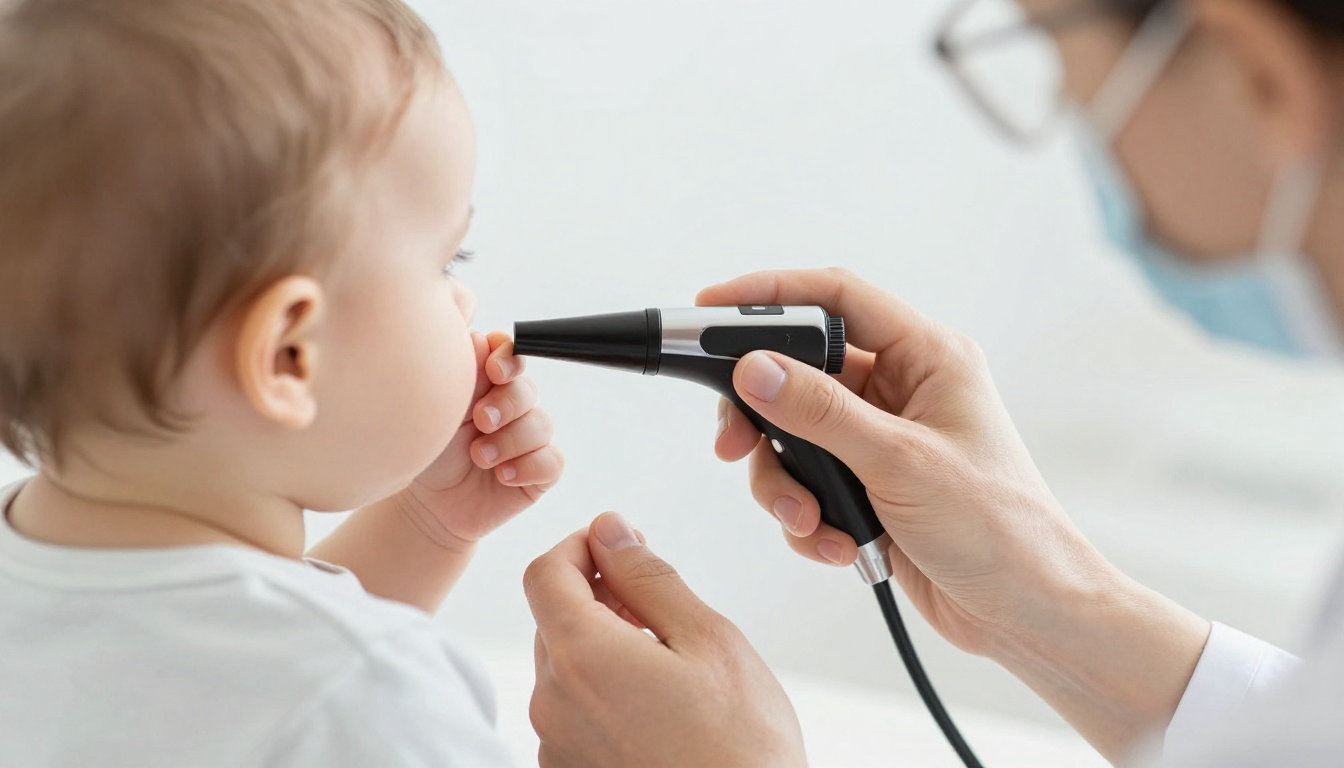
The immune system, still developing, struggles to stop the infection. Every cold can then quickly degenerate into a painful ear infection for your child. Your vigilance is therefore your best asset.
Differentiating acute otitis from serous otitis
Acute otitis media is the classic infection that causes baby pain. The eardrum is red, bulging, and sometimes purulent. It often requires rapid treatment to calm the inflammation and intense pain. This is the usual emergency.
Now let's discuss serous otitis. Here, fluid stagnates without immediate bacterial infection. It is often painless, but it can impair hearing in the long term if not treated. So stay vigilant.
| Type of Otitis | Pain | Fever | Main Risk |
|---|---|---|---|
| Acute Otitis | Severe | Present | Perforation |
| Serous Otitis | Mild | Absent | Hearing loss |
5 practical tips to immediately soothe your child
While waiting for your pediatrician appointment, a few simple actions at home can really relieve pressure in your little one's ear and soothe their cries.
Adjust sleeping position to reduce pressure
Slightly elevate the head of the bed with a suitable inclined plane. This trick uses gravity to limit blood and fluid flow to the ear. It's a simple and effective reflex.
In a semi-sitting position, the tension on the eardrum significantly decreases. Your child will feel less oppressed. They may be able to regain calmer sleep thanks to this 15-degree incline.
Never place a pillow directly under an infant's head. Use approved accessories to maintain a secure posture. For more comfort, you can also choose a co-sleeper crib adapted to your baby's needs.
Managing sucking and feeding during the crisis
Sucking creates pressure variations in the middle ear. This suddenly awakens pain during mealtime. Baby may therefore frequently interrupt feeding with crying. This is completely normal during a baby ear infection symptom.
Offer small amounts more often to avoid prolonged effort. Constant hydration remains essential. This is even truer if the fever is present and persistent in your little one.
Hold baby upright while they drink. This limits fluid reflux towards the Eustachian tubes. Even if you're looking for how to breastfeed well in a lying position, an upright position is preferable during inflammation.

The ideal time to seek medical advice
Knowing when to move from observation to consultation is essential to avoid any serious hearing complications.
Warning signs requiring quick consultation
For a newborn under three months, any fever requires immediate medical advice. Do not attempt self-medication. Contact your pediatrician without delay for an examination.
Unusual lethargy or a complete refusal to hydrate are alarming signs. If you observe redness behind the ear, consult urgently. This may indicate mastoiditis, a rare but serious complication.
Here are the symptoms that should prompt you to consult quickly:
- Fever above 39°C (102.2°F)
- Inconsolable crying
- Pus discharge from the ear
- Prostrate behavior or drowsiness
Preventing recurrence through nasal hygiene
A clean nose remains the best defense against ear infections. Wash the nasal passages with saline solution several times a day. It's a simple but truly effective gesture.

Community life inevitably exposes little ones to ENT viruses. Be particularly vigilant during the first months of daycare. We know how much the fragility of the first months requires constant attention.
Never use ear drops without prior medical advice. If the eardrum is perforated, these products could severely damage the inner ear. It is always best to seek professional advice.
To soothe your little one, remember these signs: fever, irritability, and ear rubbing. Quickly identify every symptom of baby ear infection, elevate their mattress, and clean their nose regularly. By acting early, you protect their hearing and will quickly regain serene and peaceful nights.
FAQ
How do I know if my baby has an ear infection?
Since our little ones can't express themselves with words yet, we need to observe their gestures. The most common signs are unusual irritability, intense crying (especially during feeding or bottle-feeding), and very disturbed sleep. You'll often notice baby putting their hand to their ear, pulling on it, or rubbing it repeatedly.
Physically, a fever between 38°C and 40°C often accompanies the infection. In some cases, you might even observe a yellowish fluid or a little blood draining from the ear canal, which should prompt you to consult a doctor quickly.
Why do babies often get ear infections?
It's a matter of anatomy! In infants, the Eustachian tubes—the small canals connecting the ear to the nose—are shorter and more horizontal than in adults. This unfortunately facilitates the passage of germs from the nose to the ear, especially during a simple cold.
Furthermore, prolonged lying down promotes the stagnation of fluids behind the eardrum. Since their immune system is still developing, the slightest inflammation can quickly turn into an ear infection.
How can I relieve my child's ear pain at home?
To immediately soothe your little one, you can apply a warm water compress (be careful, never hot) to the painful ear. For sleep, try to slightly elevate the upper body by sliding an inclined plane or pillows under the mattress: this reduces pressure on the eardrum and calms the pain.
Also remember to clean their nose well with saline solution and offer them frequent drinks to keep them hydrated. On medical advice, administering paracetamol remains the most effective solution for calming throbbing pain and reducing fever.
When is it necessary to see a doctor for an ear infection?
If your baby is under 3 months old, any fever or sign of pain requires an immediate consultation. For older children, you should make an appointment if symptoms last more than 48 hours, if the fever exceeds 39°C (102.2°F), or if you notice any fluid discharge.
Stay vigilant for certain warning signs: if your child seems withdrawn, refuses to hydrate, has difficulty breathing, or if redness appears behind their ear, do not wait and seek urgent medical advice.
What is the difference between acute otitis and serous otitis?
Acute otitis media is the infection that "hurts": it comes on suddenly with fever and sharp pain. The eardrum is then inflamed and often requires treatment to stop the bacterial or viral infection.
Serous otitis, on the other hand, is more discreet because it causes neither fever nor intense pain. It involves an accumulation of fluid behind the eardrum that can last for several months. While not painful, it should be monitored because it can lead to hearing loss and hinder language development.


