


The key takeaway: a retroverted uterus is a common anatomical variation affecting 25% of women, with no impact on fertility. This backward tilt is natural and harmless. It even corrects itself by the 12th week of pregnancy. For your comfort, solutions such as pelvic floor rehabilitation or positional adjustments are often enough to alleviate any discomfort.
Did you know that about 25% of women have a retroverted uterus without even knowing it? This anatomical feature, where the organ tilts backward instead of towards the bladder, is a simple natural variation of the human body.
However, this tilt can sometimes cause pain during intercourse or discomfort during periods. Let's review it together to reassure you and understand how to live serenely with this perfectly normal configuration.
- What exactly is a retroverted uterus?
- Common causes and medical diagnosis
- 2 truths about fertility and pregnancy
- Practical solutions for your daily comfort
What exactly is a retroverted uterus?
A retroverted uterus affects 25% of women and refers to a tilt towards the rectum rather than the bladder. This natural anatomical variation does not impede fertility or pregnancy, although it can cause some pelvic discomfort.
The backward position of your uterus directly influences how you feel your body every day.
A simple anatomical variation rather than a disease
The uterus is usually tilted forward, which is called anteversion. Here, it simply tilts backward. It then rests against the rectum with no medical severity for you.
Note that this particularity affects one in four women from birth. It is absolutely not a pathology. It is a simple physical difference that poses no danger to your health.
Be reassured about the normality of your body. Many women are unaware of this position their entire lives. It is often a commonplace discovery made during a routine gynecological exam.
How to recognize the signs in everyday life
Some common symptoms appear, such as marked pain during periods. Backward pressure sometimes causes bloating. You may also feel discomfort during transit.
Frequent urges to urinate is another possible sign. The position of the uterus sometimes presses on the bladder in an unusual way.
- Discomfort when inserting tampons
- Pain during deep intercourse
- Lower back pressure
These signs vary greatly. Some feel absolutely nothing at all. Others simply learn to identify these minor discomforts related to their menstrual cycle.
Common causes and medical diagnosis
While most women are born with this orientation, other factors can explain this tilting.
Between natural origin and acquired factors
Some women are born with this anatomical particularity. For others, the uterus tilts due to a loosening of the pelvic ligaments after childbirth or during menopause. This is called an acquired form.
This change in position sometimes occurs after significant events. For example, monitoring a 6-week-old baby during a growth spurt requires energy, as does postpartum physical recovery.
Endometriosis or fibroids also play a role. These pathologies create adhesions that pull the organ backward. These are common secondary causes that should be monitored with your doctor.
The course of a gynecological examination
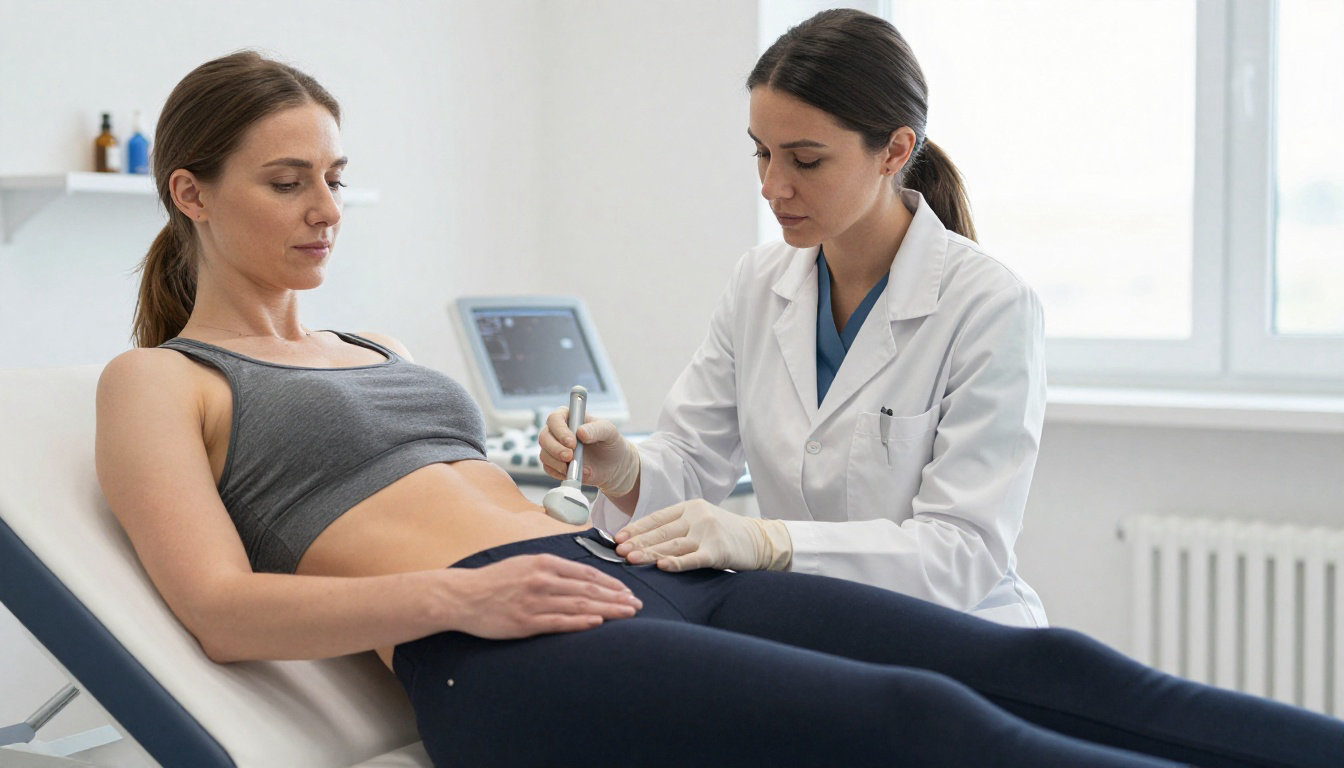
Diagnosis often begins with a simple pelvic palpation. By placing their hands on your abdomen, the practitioner feels the orientation. This is a painless, quick, and very standard procedure.
Ultrasound then allows for precise confirmation of the organ's position. It provides a clear image of the pelvic area. This examination is ideal for ruling out the presence of fibroids or other possible abnormalities.
Discovering that one has a retroverted uterus often happens by chance. Don't panic, it does not require urgent treatment. It is simply useful information to note in your follow-up file.
2 truths about fertility and pregnancy
One of the biggest concerns is the ability to become a mother, but the facts are very reassuring.
Conceiving a child without major obstacles
Having a retroverted uterus absolutely does not mean being infertile. This backward tilt never blocks the passage of sperm. They reach the egg with the same ease as elsewhere.
Even after experiencing the ordeal of a rainbow baby, know that your anatomy remains a faithful ally. The position of your uterus in no way hinders your chances of conceiving again.
In reality, thousands of women are completely unaware of this particularity before their first ultrasound. Nature adapts perfectly to this curvature. Your body knows exactly how to manage this natural configuration.
Natural tilting during the first trimester
Around the 12th week of pregnancy, a magical phenomenon often occurs spontaneously. Under the growing weight of your baby, the uterus straightens itself. It tilts forward to comfortably settle into the abdomen.
Be serene about your little treasure's health. This initial position does not hinder its early development at all. The fetus benefits from all the necessary space to grow and thrive without any constraints.
Difficulties in straightening remain extremely rare medical exceptions. If this happens, a simple manual maneuver is usually sufficient. Your doctor will know how to guide the organ to return to its ideal place.

Practical solutions for your daily comfort
Beyond health, a few simple tips can help you live better with this particularity day to day.
Adapting your intimate life and relieving pain
You can adjust your sexual intercourse for more comfort. Certain positions avoid deep shocks against the cervix. Favor those where you maintain control.
Pelvic floor rehabilitation or physiotherapy are true allies. Targeted exercises relax your ligaments and reduce tension. This provides lasting relief for your lower abdomen.
| Symptom | Practical solution | Goal |
|---|---|---|
| Pain during intercourse | Change of position | Offer immediate solutions |
| Painful periods | Hot water bottle/Yoga | Offer immediate solutions |
| Slow transit | Hydration | Offer immediate solutions |
Anticipating IUD insertion or medical follow-up
IUD insertion sometimes requires more attention. Your doctor should know the tilt of your uterus. This avoids unnecessary or painful manipulations.
For optimal follow-up, do not hesitate to undergo a complete pelvic ultrasound. This assessment allows for a clear visualization of your anatomy before any medical procedure.
Having an ultrasound before insertion precisely guides the practitioner. The procedure then becomes much smoother. You gain peace of mind.

Always encourage dialogue with your healthcare provider. Share your feelings or doubts without fear. Good communication ensures serene follow-up.
This natural anatomical variation, affecting one in four women, in no way hinders your fertility or future pregnancy. For more comfort, adjust your intimate positions and inform your healthcare provider before IUD insertion. Approach the future with confidence: your body is perfectly capable of carrying life.
FAQ
Is a retroverted uterus considered a disease?
Not at all, rest assured! A retroverted uterus is simply a natural anatomical variation. This means your uterus is tilted backward (towards the rectum) instead of leaning forward (towards the bladder). It's a very common characteristic that affects about one in four women.
In the vast majority of cases, it is absolutely not a pathology and has no serious consequences for your overall health. It's a bit like being left-handed rather than right-handed: it's a difference, but it's just as normal!
What are the signs that might indicate my uterus is tilted backward?
Many women feel nothing and discover it by chance during an examination. However, some may experience pain during periods or discomfort during sexual intercourse, especially with deep penetration. Pressure on the rectum or bladder can also occur.
You might also notice a slight discomfort when inserting or removing a tampon. If this is your case, know that alternatives like menstrual underwear or menstrual discs are often more comfortable for retroverted uteruses.
Will this prevent me from getting pregnant?
This is a common question, but the answer is reassuring: a retroverted uterus generally does not affect fertility. Sperm can reach the egg just as easily, regardless of the organ's tilt. It in no way blocks the path of life.
Furthermore, nature is very well designed: during the first trimester of pregnancy, around the 12th week, the uterus spontaneously straightens forward to make room for the baby. This initial position therefore does not hinder the proper development of your future child.
Can an IUD be inserted if I have a retroverted uterus?
Yes, IUD (intrauterine device) insertion is entirely possible! It is simply important to inform your gynecologist or midwife. As the angle of the cervix is different, the professional will need to adapt their technique to ensure the insertion remains gentle and precise.
A pelvic ultrasound is often recommended before insertion. It allows the practitioner to clearly visualize your anatomy and anticipate the tilt, which makes the procedure safer and avoids unnecessary or painful manipulations.
Are there solutions to relieve pain related to this position?
If you experience tension, pelvic floor rehabilitation with a physiotherapist is an excellent option. Targeted exercises help relax the ligaments and strengthen the muscles that support the uterus. Yoga and breathing techniques can also work wonders to soothe the lower abdominal area.
In daily life, small, simple adjustments such as changing positions during intimate relations or using a hot water bottle during periods are often enough to regain true comfort. Surgery remains extremely rare.


