


Key takeaway: in France, a car seat is mandatory until the age of 10, unless the child exceeds 1.35m before that age. Using an R129 (i-Size) approved device guarantees optimal safety thanks to side impact tests. To protect their fragile neck, keep them rear-facing until at least 15 months, or risk a €135 fine.
In France, the use of an approved child restraint system is mandatory until your child's tenth birthday, under penalty of a flat-rate fine of 135 euros. However, between the R44 and i-Size standards, one often feels overwhelmed when it comes to switching to a simple seat belt.
It's sometimes difficult to know exactly which car seat to use until what age to guarantee optimal protection. We'll review together the rules of height and morphology for worry-free travel.
- Car seat and age: legal obligations until 10 years old
- 3 indicators to change seats without making a mistake
- Why stay rear-facing as long as possible
- How to transition to a seat belt with confidence
Car seat and age: legal obligations until 10 years old
In France, a car seat is mandatory until 10 years old or 1.35 m. Devices must comply with R44/04 or R129 (i-Size) standards, the latter requiring rear-facing until at least 15 months to protect fragile necks.
The latest information on the i-Size standard leads directly to the rule of height and age.
The 10-year rule and the 135-centimeter threshold
French law requires an approved child restraint system until your child's 10th birthday. Real safety takes precedence over civil age to protect their fragile pelvis. If you forget, you risk a flat-rate fine of 135 euros.
However, an exemption exists as soon as the child reaches 135 centimeters. At this height, the seat belt alone becomes legal even before 10 years old. It is the child's morphology that dictates this exception for transport.
To equip yourself well, consult our guide on Teats from birth | Guide and pediatrician's advice 2026 to successfully choose childcare equipment. We always want the best for our little ones.
The approval must be visible on the orange label of the seat. This marking guarantees that the product has passed European collision tests.
Check compatibility with your car. A poorly secured seat becomes useless.
Differences between R44 and i-Size (R129) standards
The R44 standard classifies seats by weight according to groups from 0 to 3. This is the old segmentation method. It is still tolerated today but is becoming gradually obsolete.
The i-Size (R129) standard is based on height in centimeters. It imposes much stricter side impact tests. It is now the absolute benchmark for ensuring optimal safety.
i-Size requires rear-facing until at least 15 months. This position drastically reduces the risk of serious neck injuries. This is a major step forward in protecting our babies.
3 indicators to change seats without making a mistake
Beyond legal texts, it is direct observation of your child that should trigger the transition to the next model.
Why height trumps age for safety
Keep a close eye on the top of the skull. The head should never extend beyond the edge of the car seat. If it does, change it immediately. Protection is no longer guaranteed.
Then check the position of the harnesses. The straps should come from just above the shoulders. Incorrect adjustment compromises support. Be vigilant on this point.
To improve comfort during journeys, the article How Many Swaddles for Baby: Guide for an Adapted Choice offers useful tips.
Car seat categories from infant carrier to booster seat
| Category | Height / Weight | Use |
|---|---|---|
| Infant carrier (0+) | 40-75 cm / 13 kg | Rear-facing |
| Toddler seat | 61-105 cm / 18 kg | Harness |
| Booster seat | 100-150 cm / 36 kg | High-back |
| Seat belt | From 135 cm / 10 years | Alone |
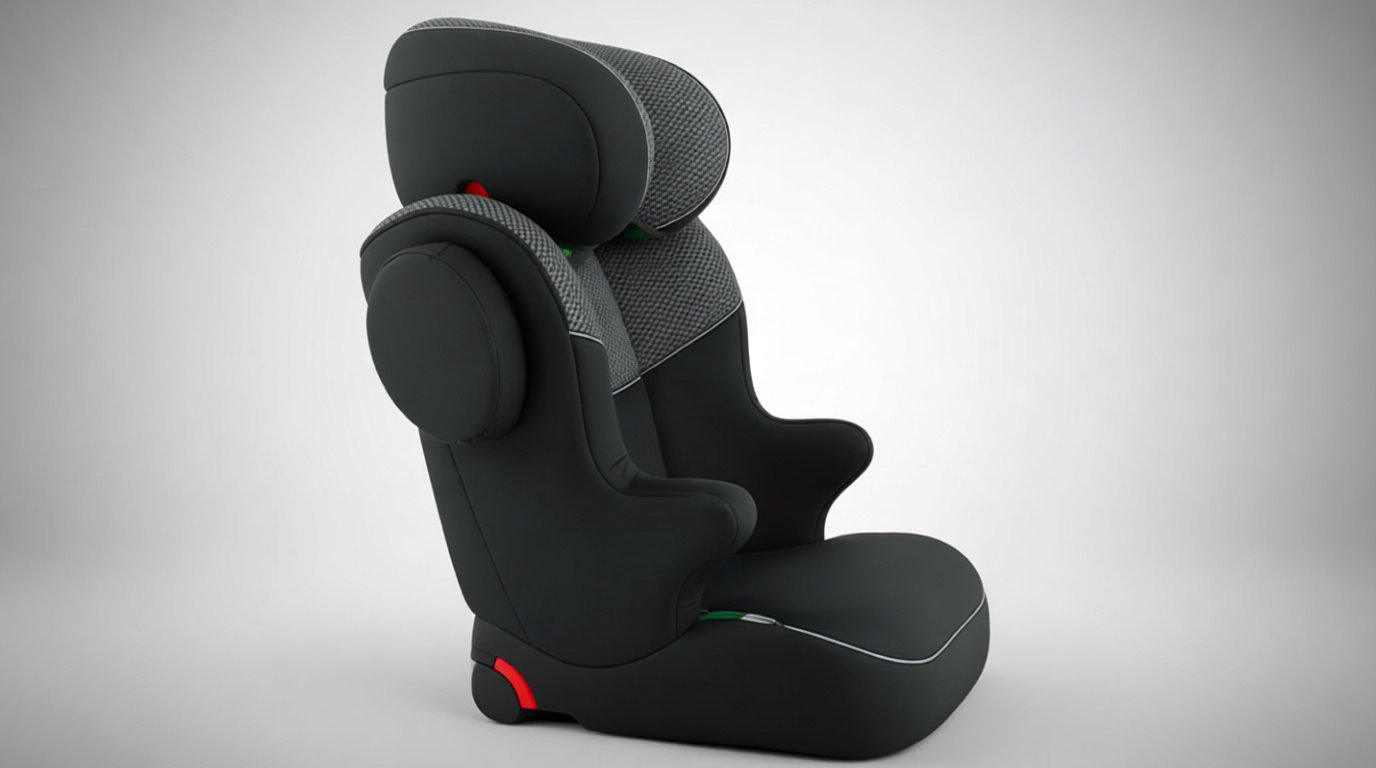
The high-back booster seat is the final step. It positions the seat belt over the pelvic bones. It's much safer than a cushion.
Convertible car seats adjust over several years. Their removable inserts follow growth. This is often a very cost-effective choice.
Why stay rear-facing as long as possible
The choice of model matters, but its orientation in the car remains the number one survival factor in the event of a collision.
Neck protection and force distribution
Your baby's neck is extremely fragile. Their head is very heavy compared to their small body. During a frontal impact, the forces become immense.
The rear-facing seat acts as a shield. The shell absorbs energy and distributes it over the entire spine. This avoids the terrible whiplash effect.
Consult our guide on Baby Cries - understanding and soothing your newborn to better manage sometimes stressful journeys.
Managing the transition to forward-facing without rushing
Keep your child rear-facing until age 4. This is experts' advice for maximum safety. Do not rush to turn the seat around.
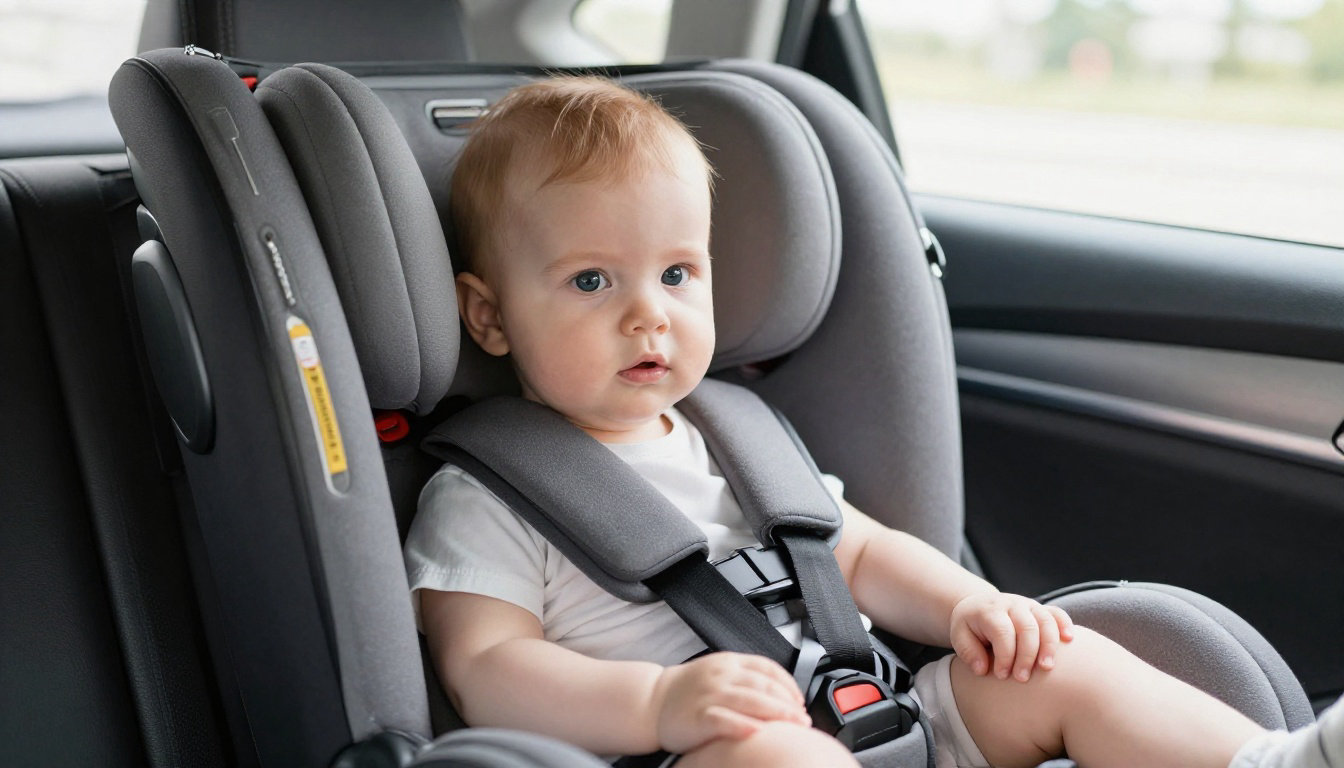
Here are some tips to make your journeys easier:
- Install a rearview mirror
- Choose a seat with a footrest
- Explain the importance of safety to the child
- Prioritize soft toys
Visual comfort is really not an issue. Little ones get used to looking out the rear window very quickly. It's simply a matter of habit.
How to transition to a seat belt with confidence
Finally, when it's time to move on from the car seat, a few final checks are essential to guarantee flawless protection.
Identifying signs of a seat that has become too narrow
Observe the alignment of the seatbelt. It must pass exactly over the middle of the shoulder. It should never rub your child's neck. The pelvis must remain securely in place.
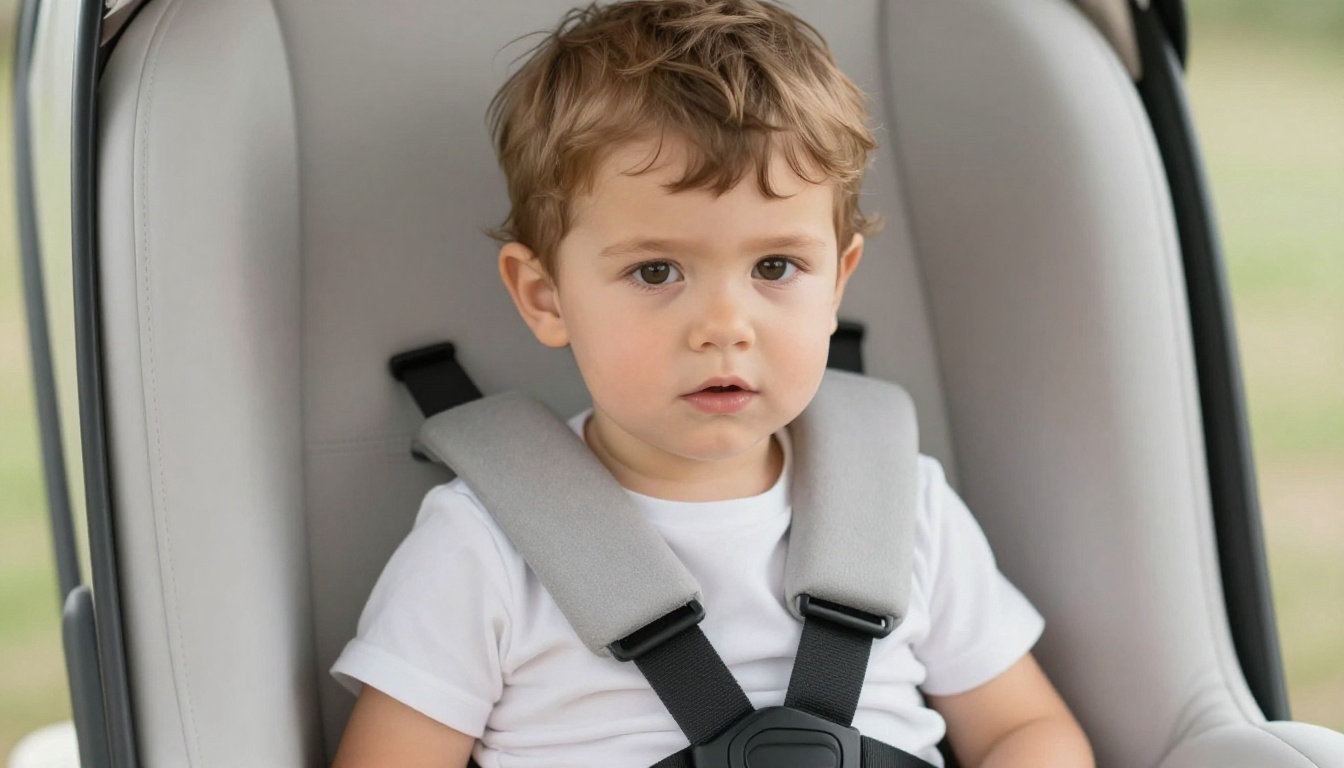
Make sure their feet touch the floor. This prevents the dangerous phenomenon of submarining. The child should not slip under the strap. This is a truly crucial point of vigilance.
Also consider overall comfort. Consult our guide How to Dress Baby at Night? Seasonal and Thermal Guide to equip them well.
Vigilance regarding wear and the dangers of second-hand items
Beware of invisible micro-fissures. Plastic ages poorly in the sun. After an impact, even a slight one, the structure is weakened. Do not take any risks with worn equipment.
I strongly advise against buying second-hand. Without a history, you don't know if the seat has been in an accident. Damage is not always visible. So be extremely careful for your little one.
Check the manufacturer's expiration date. It is often engraved in the plastic. A seat more than ten years old is often expired.
In France, your child's safety requires an approved car seat until they are 10 years old or 1.35 m tall. Prioritize rear-facing for as long as possible to protect their fragile neck. Anticipate their needs now to travel safely and ensure their optimal protection on every journey.
FAQ
Until what age must my child use a car seat?
In France, the law is very clear: your child must be placed in an approved restraint system until they are 10 years old. This is an essential safety rule to protect their still fragile physique in the event of a collision.
However, if your child reaches a height of 1.35 meters before their 10th birthday, they can legally use only the seat belt. Keep in mind that non-compliance with this obligation exposes you to a flat-rate fine of 135 euros.
How do I know when it's time to change car seats?
Changing seats depends primarily on your child's height and weight. For seats approved under the R44 standard, refer to weight groups. For i-Size (R129) models, height in centimeters is what matters.
A concrete indicator to reassure you: if the top of your child's head extends beyond the top of the car seat or if the harnesses no longer come from just above their shoulders, it's time to upgrade to the next model to ensure their safety.
What are the differences between R44 and i-Size (R129) standards?
The R44 standard is the older regulation that classifies seats by weight. The i-Size (R129) standard is the most recent and safest: it is based on the child's height, requires the Isofix system to prevent installation errors, and includes rigorous side impact tests.
Furthermore, the i-Size standard requires infants to travel rear-facing until at least 15 months. This is a major step forward in protecting their neck and head, which are proportionally heavier than the rest of their body.
Can I use a second-hand car seat to save money?
I advise you to be very cautious on this point. Buying a used car seat is risky because you don't know its history. A car seat that has been in an accident, even a minor one, can have micro-cracks invisible to the naked eye that completely compromise its effectiveness.
Furthermore, materials such as plastic age and weaken with time and exposure to the sun. For your little one's safety, always opt for new equipment whose origin and expiration date you are sure of.
When can my child switch to a backless booster seat?
The transition to a booster seat generally occurs around 15 or 22 kg depending on the model, but it is ideal to prioritize a high-back booster seat for as long as possible. The backrest helps to guide the seat belt better over the bony areas (shoulder and pelvis) and provides better upper body protection in the event of a collision.
Before removing the backrest or switching to just the seat belt, ensure that the strap never rubs the child's neck and that they are not at risk of slipping under the belt (submarining phenomenon).


