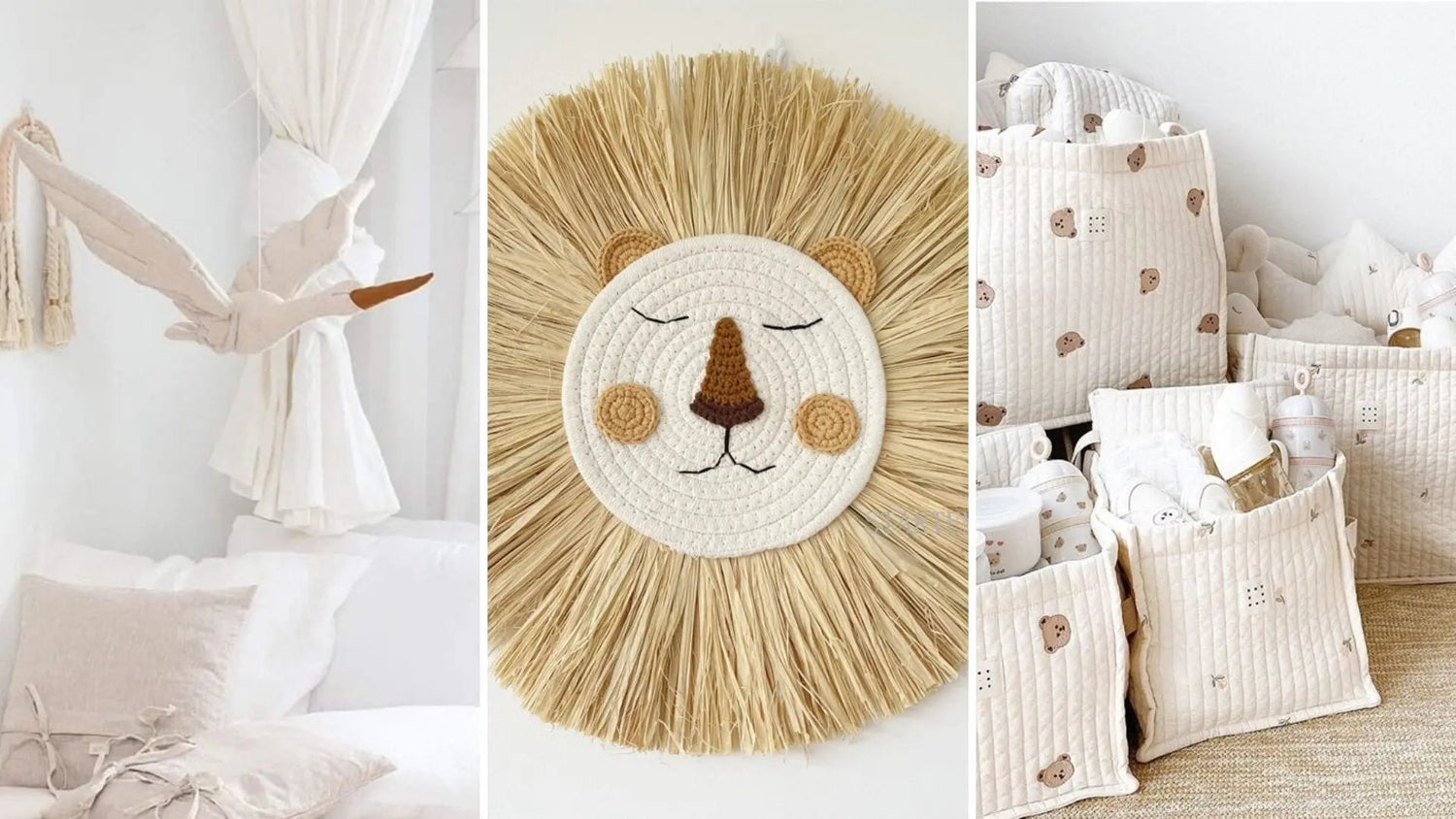


Your youngest is growing up, and their room isn't keeping up. The crib that seemed huge two years ago now looks tiny, toys are overflowing from the chest, and you're starting to wonder where to begin this transformation. Good news: setting up a child's room is not rocket science. You just need to think practically, safely, and a little about decor. Let us guide you.
The fundamentals of a toddler-friendly room
Secure the space without sterilizing it
Between 1 and 3 years old, a child touches everything, climbs everywhere, and tests the limits of gravity with a creativity that commands respect. The room needs to be able to handle all of that. Anchor furniture to the wall, opt for rounded corners, and store small objects out of reach. But there's no need to turn the room into a padded cell either. A soft rug on the floor, protected outlets, and you're good to go.
Are you wondering if you need to plan everything from the start? Not necessarily. Needs change quickly, and a too-rigid setup will become obsolete in a few months. It's better to opt for modular elements that you can adapt over time.
Storage, the sinews of war
With a child, clutter sets in at an incredible speed. Accessible toy bins, a small shelf at their height, colorful baskets: these are your anti-chaos weapons. The idea is that your child should be able to get their things themselves, and especially put them away themselves. Well, in theory. In practice, you'll still pick up a lot of Lego by hand. But at least, the system exists.
A game-changing tip: turn the storage bins to face the child and stick a photo of what goes inside. Cars with cars, stuffed animals with stuffed animals. Even at 2 years old, it works.
Choosing a bed: the centerpiece of the room
What type of bed for what age?
The bed is the furniture around which everything else is organized. And the choice becomes more complicated as the child grows. Before 2 years old, the crib does the job. After that, options multiply. A Montessori-style floor bed for the youngest who like their autonomy. A cabin bed to turn bedtime into an adventure. A loft bed from 6-7 years old to free up floor space. Each option has its advantages, and the right choice depends mainly on your child, their temperament, and the size of the room.
Honestly? Most parents change beds at least twice before their child is 10 years old. It's normal. A baby who slept like an angel in their crib might very well categorically refuse a "big" bed if they don't like it. Better to choose a model that makes them want to climb into it every night.
Finding a bed that combines quality and reasonable budget
When it's time to transition to a real child's bed, the headache often starts with the wallet. Prices vary from single to quintuple depending on the brands, and it's not always easy to navigate between shaky entry-level models and overpriced designer beds.
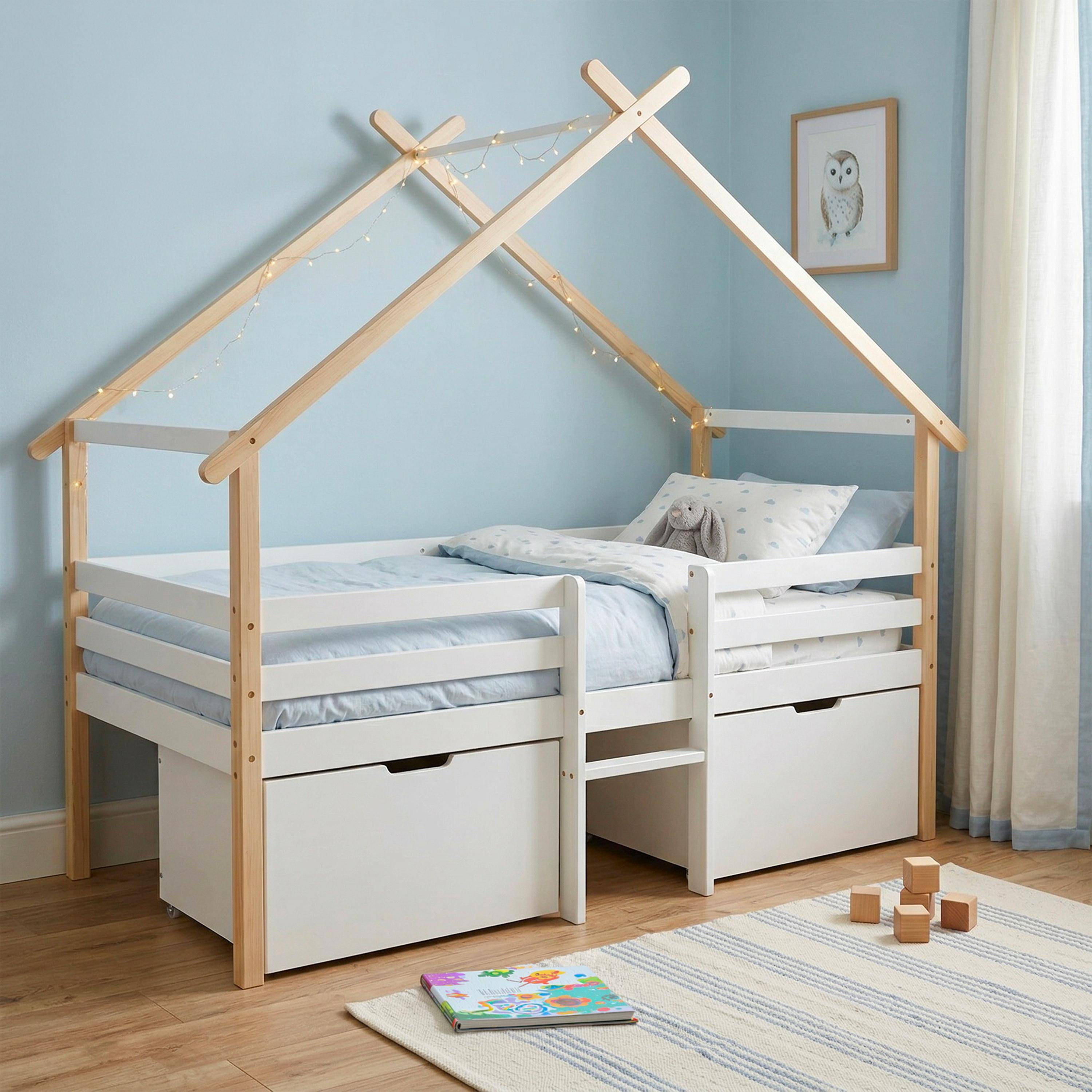
The brand Sweeek offers this selection of children's beds that covers a wide range of styles: natural wood cabin beds, teepee beds, classic models in 90x190 or 90x200, and even trundle beds for siblings. With 33 references starting from 69.99 euros and multiple payment options, it's the kind of catalog where you eventually find the right compromise between budget, safety, and style.
What truly matters in a child's bed, beyond the look, is the sturdiness of the bed base, the height of the safety rails for younger children, and ease of assembly. Nobody wants to spend their Sunday afternoon with an incomprehensible instruction manual and 47 different screws. Also check the mattress dimensions before buying: a 90x190 won't fit into a frame designed for a 90x200, and vice versa.
The importance of the mattress (often overlooked)
We invest in a beautiful bed, and then we put the first mattress on sale on it. Classic mistake. A child spends between 10 and 12 hours a night in their bed. Their mattress must be firm without being hard, sufficiently thick (at least 15 cm), and if possible Oeko-Tex certified to limit chemical substances. Did you know? A mattress that is too soft can cause back pain in growing children, just as it can in adults.
Creating an atmosphere that evolves with the child
Colors and light
Forget the all-blue or all-pink look that dates from another era. The most successful children's rooms rely on a neutral base (off-white, beige, light gray) enhanced with colorful touches that are easy to change. A wall painted sage green, mustard yellow cushions, a rug with soft hues: this is a palette that will last for years without becoming tiresome.
And when your 8-year-old decides their passion is dinosaurs, all you'll need to do is change the posters on the wall instead of repainting everything. Clever, right?
For lighting, think in layers. A main ceiling light, a night light near the bed, and a desk lamp for activities. String lights are very popular with children and create a soft atmosphere at bedtime.
Well-defined spaces
Even in a small room of 9 or 10 square meters, it's possible to define zones. The sleeping area, the play area, the reading area. It doesn't have to be sophisticated: a small rug on the floor is enough to mark the territory. This organization helps the child understand that each activity has its own space, which also facilitates tidying up (we always come back to that).
Tip: install a small bookcase at child height with book covers facing out. Children are much more likely to choose a book when they see the cover illustration rather than the spine.
Mistakes to avoid when furnishing a child's room
Buying too much furniture at once
It's tempting to want to set everything up at once: the bed, the desk, the dresser, the wardrobe, the nightstand, the wall shelf. The result? The room is overcrowded and the child has no space left to play on the floor. Children need free space. Start with the essentials (the bed, a storage unit, a play area) and add the rest gradually, according to real needs.
Underestimating the child's opinion
From the age of 3, your child has preferences. They may not choose the same colors as you, and their sense of aesthetics may surprise you (or make you grit your teeth). But involving them in decisions, even minor ones, helps them appropriate their space. Offer them two or three pre-selected options and let them decide. You maintain control, they feel like they're choosing. Everyone wins.
Smoothly accompanying transitions
When the baby's room becomes a child's room
The transition from a baby's room to a "big kid's" room is a milestone for the whole family. Some children look forward to it, others cling to their old decor like a lifeline. No rush. Introduce changes one by one: first the new bed, then a few weeks later the new storage, and so on. This gives the child time to adapt without being overwhelmed by novelty.
And what if your child refuses their new bed for the first few nights? It's common. Stay with them at bedtime, read a story in the new setting, and let their favorite stuffed animal bridge the gap between the old and the new. Generally, one to two weeks are enough for the transition to happen naturally.
Frequently asked questions
At what age should a child transition from a crib to a toddler bed?
Most children are ready between 2 and 3 years old, when they start climbing out of the crib or asking for more independence. Observe the signals: if your child tries to get out of bed on their own, it's a good time to consider the transition.
Cabin bed or classic bed: which to choose?
A cabin bed stimulates imagination and makes bedtime more appealing, which helps reluctant children. A classic bed is more neutral and ages better. If the room is small, a classic bed with integrated storage will be more practical for daily use.
What size mattress for a child aged 3 to 6?
The 90x190 cm is the most common and versatile size. It accompanies the child until adolescence without needing to be replaced. Check that the bed frame is compatible before buying.
Ultimately, furnishing your child's room is a project that builds over time. No need to plan everything down to the last centimeter. The space will live, transform, and adapt. And that's precisely what makes it interesting: a child's room is never truly finished; it grows with the person who lives in it.


