


Key takeaway: your baby's growth is a spectacular journey, from 0.1 mm to about 50 cm at birth. Following these stages helps you better understand their needs and calmly prepare for their arrival. A striking fact: by the 12th week, your little one is already the size of a lime.
Do you sometimes feel lost amidst contradictory figures about fetal size and the progression of your pregnancy? This article deciphers the average measurements week by week to help you transform your doubts into a serene and joyful wait. You'll discover concrete benchmarks and tips for tracking your baby's growth while learning to respect their own developmental rhythm.
- Understanding how your baby's size is calculated each week
- First trimester: rapid growth in complete discretion
- Second trimester: baby stretches and makes their presence felt
- Third trimester: building strength for the big day
- Medical monitoring and normal developmental variations
Understanding how your baby's size is calculated each week
After announcing the pregnancy, the first question that often comes to mind is the actual size of this little being growing inside you.
Distinguishing between weeks of amenorrhea and weeks of pregnancy
Medical calculation is based on weeks of amenorrhea (WA). It begins on the first day of your last period. Conversely, weeks of pregnancy (WP) count the actual age of the embryo. Doctors prefer WA for their precision.
There is often a two-week difference between these measurements. Remembering this nuance between WA and WP avoids a lot of worry.
Curious? Also discover the Chinese calendar that predicts baby's gender for a bit of fun.
Differentiating between the embryonic and fetal stages
The major biological transition occurs around the tenth week of amenorrhea. This is a key stage of prenatal development. Cellular organization gives way to a more defined human structure.
The term fetus is officially used from the ninth week of pregnancy. At this stage, the main organs are formed. They now begin to function and gradually perfect themselves.
This symbolic passage marks the end of the formation period. The future baby becomes more robust. They begin their intensive growth phase.
Interpreting averages without unnecessary stress
Keep in mind that growth charts are still statistical benchmarks. They are not rigid standards. Each fetal size varies according to the measurements taken during ultrasounds.
Each child develops at their own biological pace. Parents' genetic heritage greatly influences these figures. A small baby at birth can be perfectly healthy.
The essential remains the regularity of the growth curve. Don't compare your belly to others. Trust healthcare professionals.
First trimester: rapid growth in complete discretion
Even if the belly remains flat at the beginning, the activity inside is nevertheless intense and the changes are spectacular.
Measuring the evolution of the first weeks in millimeters
From the 3rd week, your future baby measures barely 0.1 mm. In just two months, they already reach 5 cm. In the meantime, small buds appear to form their future limbs. It's an invisible but incredibly rapid metamorphosis.
Around the 4th week, the heart already begins to beat. Hearing these first heartbeats is a moving step. This sound suddenly makes the adventure very concrete for you and the father.
It's sometimes the moment when we think about the journey, especially for a rainbow baby. Every millimeter gained is a victory.
Visualizing size with fun fruit benchmarks
At the very beginning, the embryo resembles a simple grain of rice. Quickly, it becomes a strawberry then a lime. Using these concrete images really helps you realize what's happening in your body.
These comparisons are perfect for involving the future dad in daily life. It's a fun way to share the progress of the pregnancy together. This makes fetal size evolution much more tangible and less abstract.
- 3rd week: grain of rice
- 8th week: raspberry
- 12th week: lime
Observing the first shapes during the dating ultrasound
During this appointment, the gynecologist takes very precise measurements. They focus mainly on the crown-rump length, the famous CRL. This allows for precise dating of the start of your pregnancy.
Don't be surprised by the millimeter precision of modern devices. Professionals thus validate the vitality of the fetus with great rigor. It's reassuring to see that everything is developing normally.
This first official appointment finally brings the adventure to life. Stress gives way to joy.

Second trimester: baby stretches and makes their presence felt
After the three-month mark, the fetus gets comfortable and begins to interact with its environment.
Tracking body elongation and awakening of senses
The body lengthens impressively during this trimester. Your baby grows from approximately 7 cm to 30 cm. This rapid growth transforms their silhouette week after week before your eyes.
Hearing and taste finally awaken. The baby begins to perceive external sounds and the flavors of the amniotic fluid. This is the ideal time to talk to them gently every day.
Prepare a harmonious and stimulating nursery. Anticipate their arrival with serenity.
Connecting size and felt movements
The kicks finally become perceptible to you. The limbs lengthen and the baby gains muscle strength. You will feel their first strong little kicks very soon, promise.
The somersaults sometimes become visible through the belly. It's a fascinating spectacle for close family and friends. Observe these waves on your skin, it's magical and concrete.
Every movement is a sign of good health. Enjoy these moments of connection.
Adapting daily comfort to the rounding of the belly
The center of gravity inevitably shifts with the increasing volume of the uterus. Suggesting adapted resting postures helps to relieve lumbar tension. Remember to tilt your pelvis to protect your tired back.
Sleep can become more difficult with this new volume. Use nursing pillows to prop up your belly at night. This makes all the difference for your hips.
Listen to your body and rest often. Your well-being is essential now.

Third trimester: building strength for the big day
The final stretch has arrived, and the baby is actively preparing for life outside.
Monitoring weight gain and uterine volume
The baby accumulates protective fats. They focus on their final weight gain for term. Their limbs finally round out to face the outside world with serenity.

Fetal size reaches approximately 50 cm. The average weight is around 3 kg according to medical estimates. These measurements naturally vary depending on the genetic profile of the parents concerned.
You need to know how to dress baby at night. It's a matter of thermal comfort.
Understanding the role of the placenta and amniotic fluid
The placenta provides vital oxygen and nutrients. Amniotic fluid cushions impacts and maintains temperature. It also allows the baby to move freely. This environment even promotes lung development.
The volume of fluid decreases slightly at the end of pregnancy. This is a normal preparation process. The amniotic sac, however, is regularly renewed.
Your body is working hard for them. Stay attentive to your water needs.
Anticipating final size to prepare the hospital bag
Choose soft and practical clothes. Plan for newborn and 0-3 month sizes according to the latest estimates. It's better to anticipate several sizes to avoid unpleasant surprises.
Organize the layette without waste. No need to buy too much before knowing the actual size. Your newborn will grow very quickly during the first weeks of life anyway.
- 3 newborn pajamas
- 5 cotton bodysuits
- 1 soft hat
Medical monitoring and normal developmental variations
To ensure everything is going well, medical examinations provide valuable data on growth.
Deciphering measurements during mandatory ultrasounds
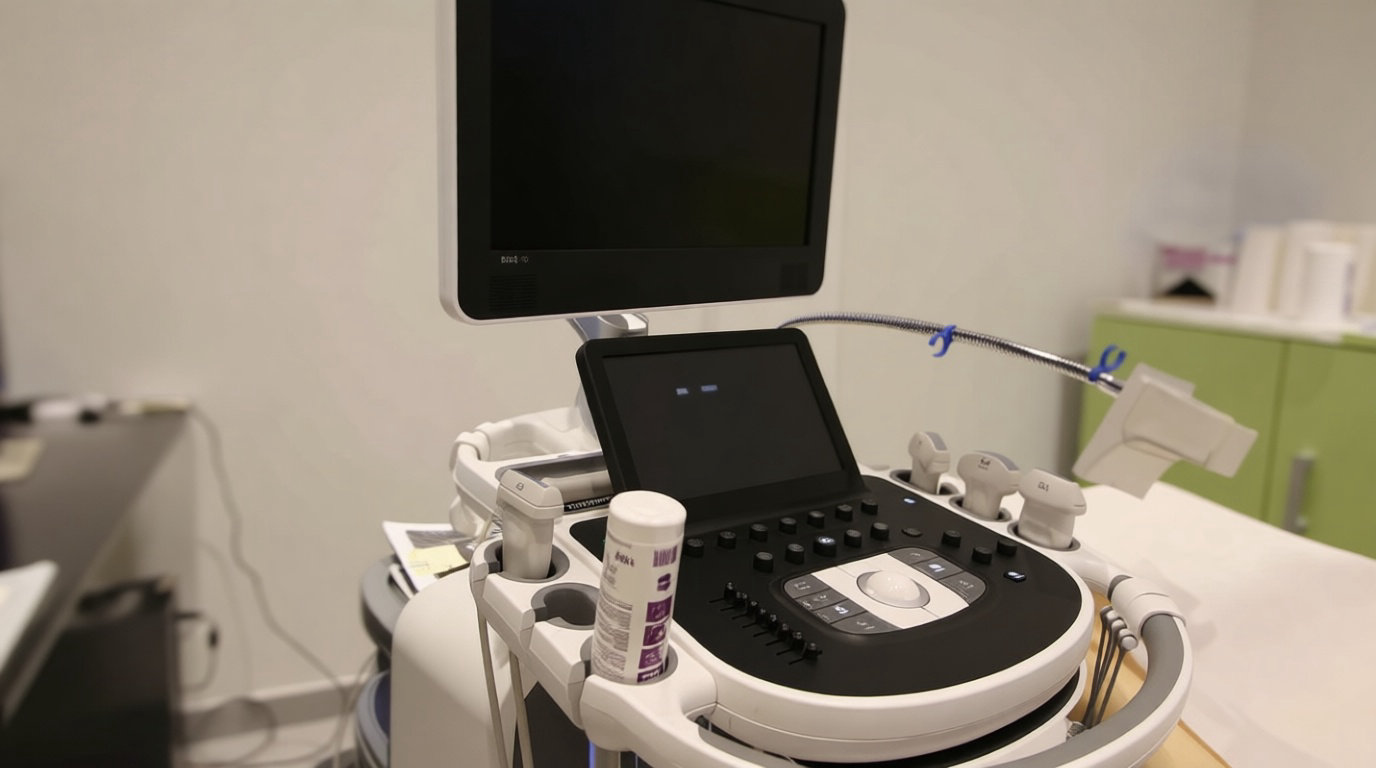
During your appointments, you will see codes like BPD or FL. They simply measure the skull or thigh. The AC, for its part, helps to estimate future weight.
The sonographer remains your best ally for understanding these figures. They place each measurement on a global curve. Their expertise primarily serves to reassure you about the evolution.
| Term (WA) | Approx. Size | Approx. Weight | Fruit Benchmark |
|---|---|---|---|
| 12 WA | 10 cm | 40 g | Plum |
| 22 WA | 26 cm | 500 g | Papaya |
| 32 WA | 40 cm | 1800 g | Squash |
| Term (40 WA) | 51 cm | 3500 g | Watermelon |
This table summarizes the key stages. Your baby is growing fast.
Accepting deviations from standard curves
Genetics plays a major role in your child's size. If the parents are rather small, the baby will naturally follow this pattern. It's a simple matter of heredity.
A small size can be perfectly healthy. The essential lies in the regularity of their own growth curve. Each little being progresses at their own biological rhythm.
Don't fixate on an isolated number. Healthcare professionals monitor the overall dynamic.
Using interactive tools to track progress
Mobile applications now allow you to track fetal size with fun images. These tools transform raw data into concrete visuals. This really helps to alleviate daily stress.
Live this waiting period with gentleness and kindness. Pregnancy is not a race for physical performance. Enjoy every moment without comparing your statistics.
You can even keep a unique memory with an ultrasound video frame 2026. It's magical.
Every stage of your baby's growth is unique, from a grain of rice to a cantaloupe. Trust your feelings and your ultrasounds to calmly monitor the size of your future child. Gently prepare for their arrival: this little being will soon be in your arms.
FAQ
What is the difference between weeks of amenorrhea and weeks of pregnancy?
This is a question we all ask at the beginning! Weeks of amenorrhea (WA) correspond to the medical calculation. This is the reference used by doctors for greater reliability.
Weeks of pregnancy (WP), on the other hand, count your baby's actual age from fertilization. There is generally a two-week difference: for example, 15 WA corresponds to 13 WP. Don't worry, you'll quickly get used to it!
When does my baby go from being an embryo to a fetus?
This symbolic transition occurs at the 10th week of pregnancy (i.e., 12 WA). It's a key stage because the main organs are already formed and in place. At this stage, your little treasure measures about 35 mm and their heart is already beating very fast, at around 170 beats per minute.
What is the average size of a fetus month by month?
Growth is truly impressive! At the end of the first trimester (12 WP), they measure about 5 cm. At the end of the second trimester (22 WP), they already reach 24 cm. For the big day, around the 39th week of pregnancy, their size is generally between 50 and 53 cm.
Should I worry if my baby's measurements are not exactly average?
Not at all, stay calm. The figures you see are statistical averages. Each baby grows at their own pace, and their genetic heritage plays a large role: if the parents are rather small, it's normal for the baby to be too. The essential for your doctor is that their growth curve remains regular.
How do doctors measure my baby's size during ultrasounds?
At the very beginning, the gynecologist measures the crown-rump length (CRL), which is from head to bottom. Later, they use other indicators such as head diameter (BPD) or femur length (FL) to estimate their overall size and weight. This is very precise and helps to check that the baby is in good health.


